The Merger Closed. Your Planning Model Didn't.
M&A can change the business faster than planning can integrate. A Minimum Viable Decision System preserves decision continuity while the permanent model is built.
One weekly supply chain planning signal before it becomes obvious.
M&A can change the business faster than planning can integrate. A Minimum Viable Decision System preserves decision continuity while the permanent model is built.
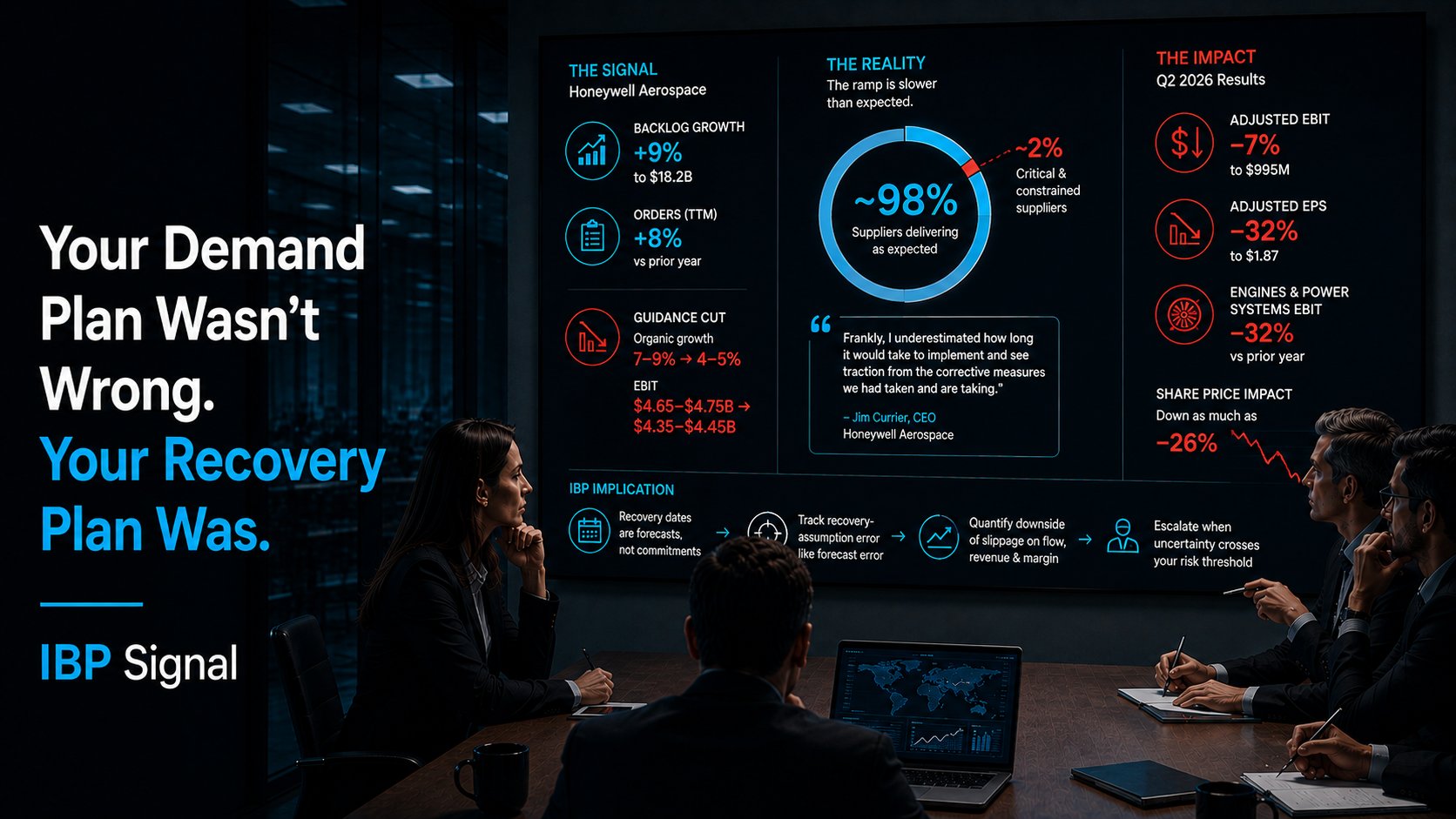
Honeywell Aerospace cut 2026 guidance despite strong demand signals. The planning failure wasn't the forecast. It was the recovery assumption behind the supply ramp.
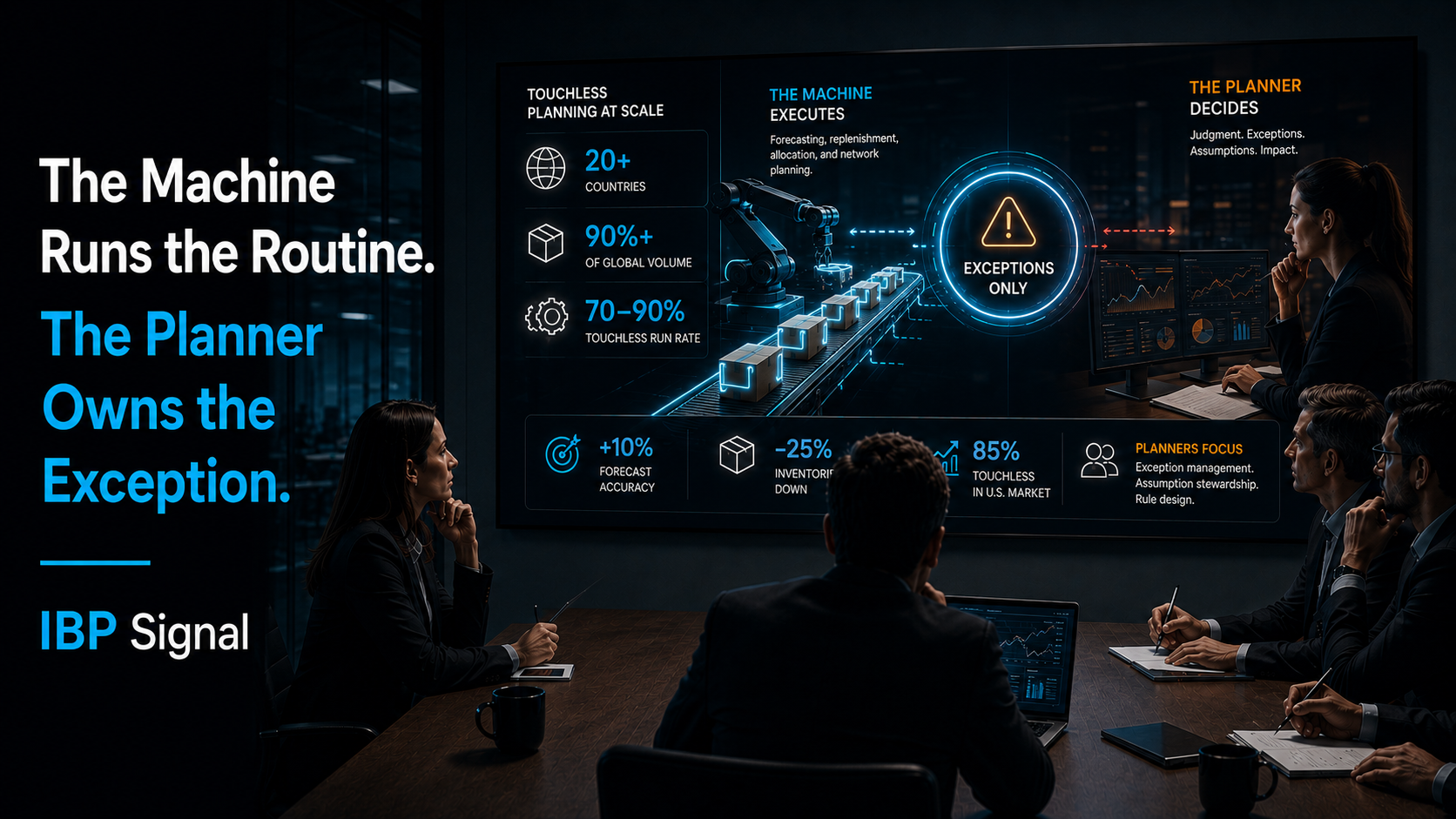
AB InBev's touchless planning signal shows that automation does not remove planner responsibility. It moves that responsibility toward exception judgment, assumption stewardship, and process design.
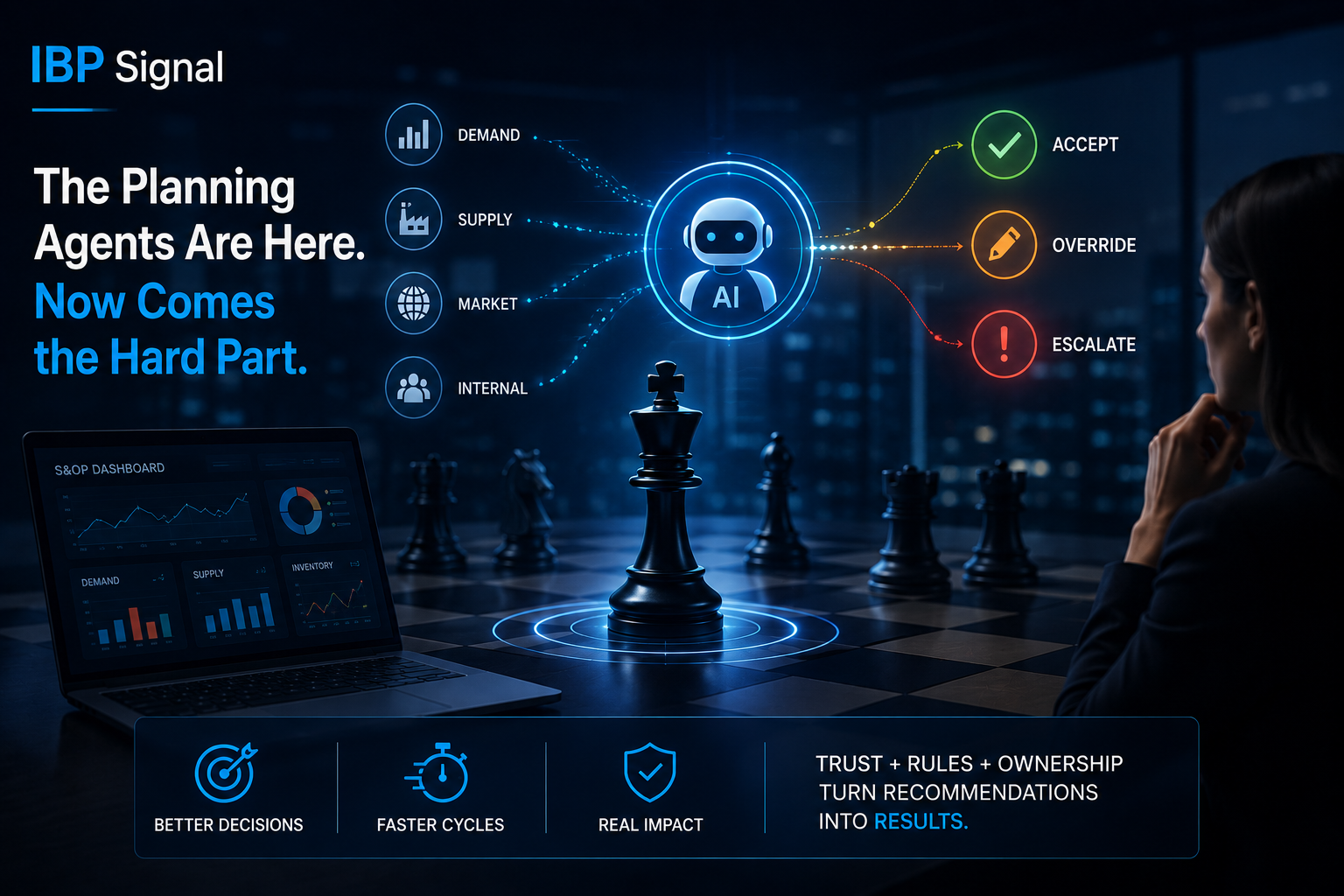
Agentic AI planning tools are arriving inside live IBP workflows. The next advantage belongs to teams that define accept, override, and escalate rules before the next cycle.
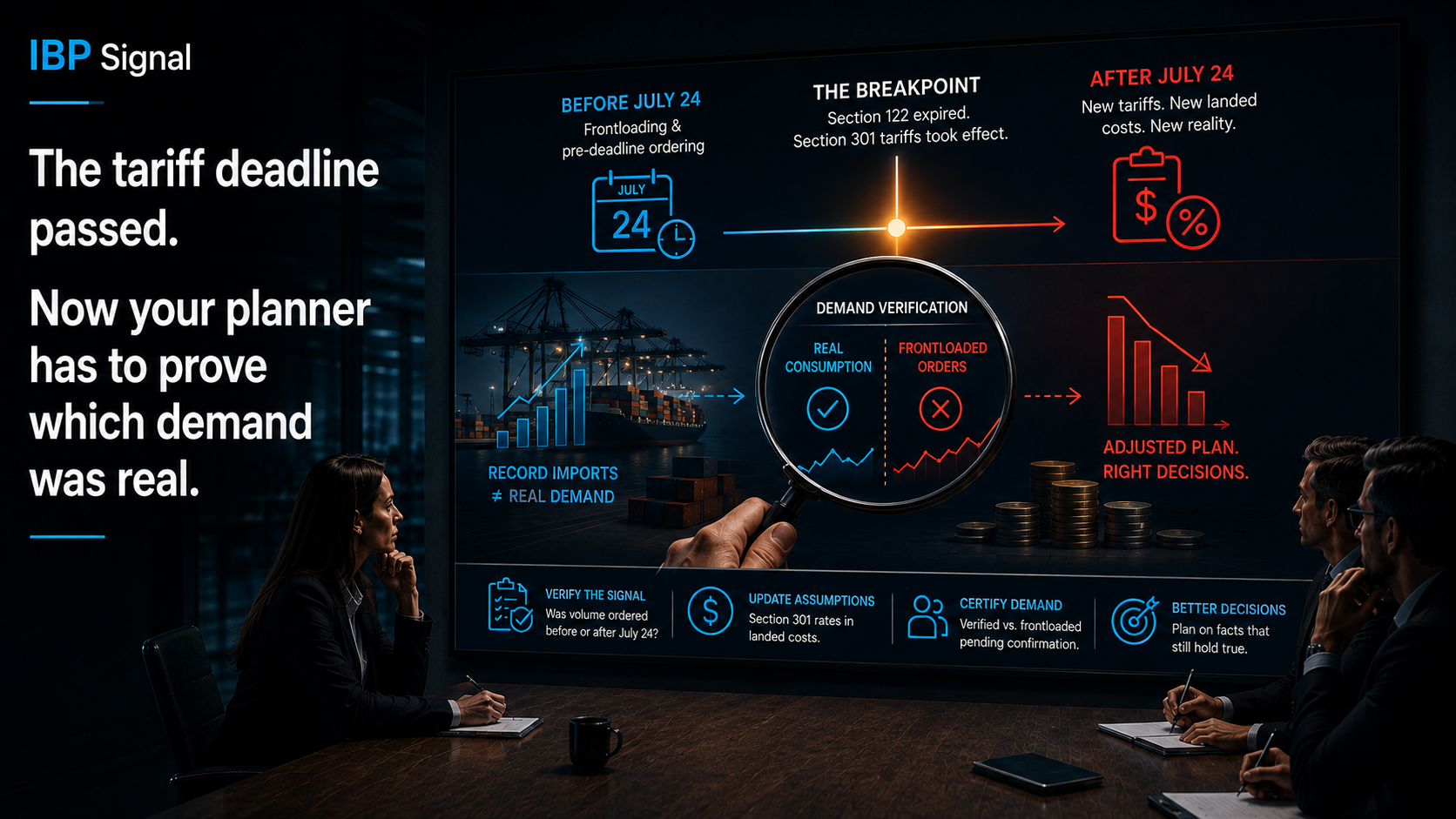
The July 24 tariff reset creates a demand-planning breakpoint. Your next Demand Review must separate structural consumption from tariff-induced frontloading.
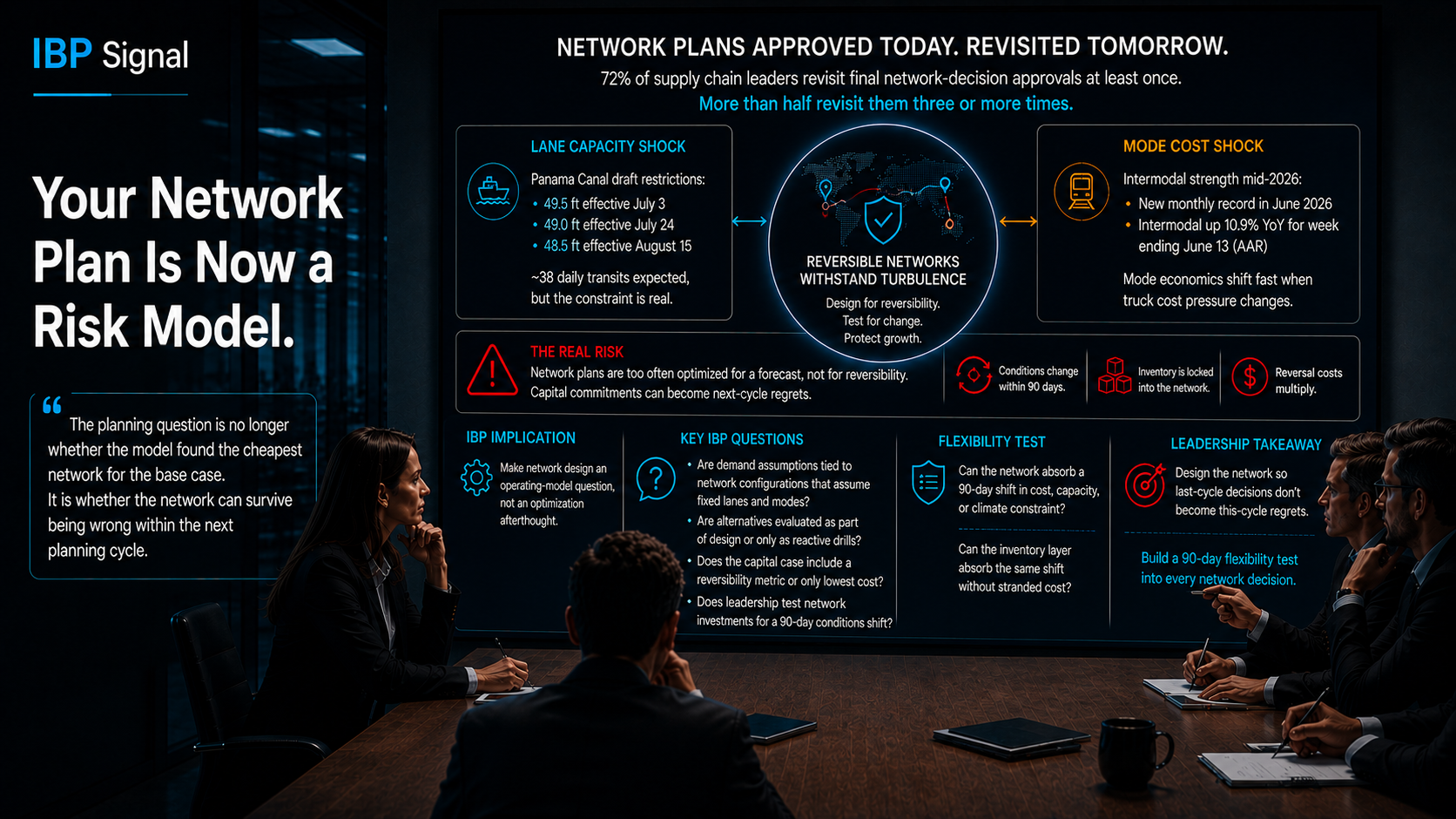
Network flexibility is not an optimization afterthought. It is a capital-commitment discipline, and most organizations are still optimizing for the wrong test.
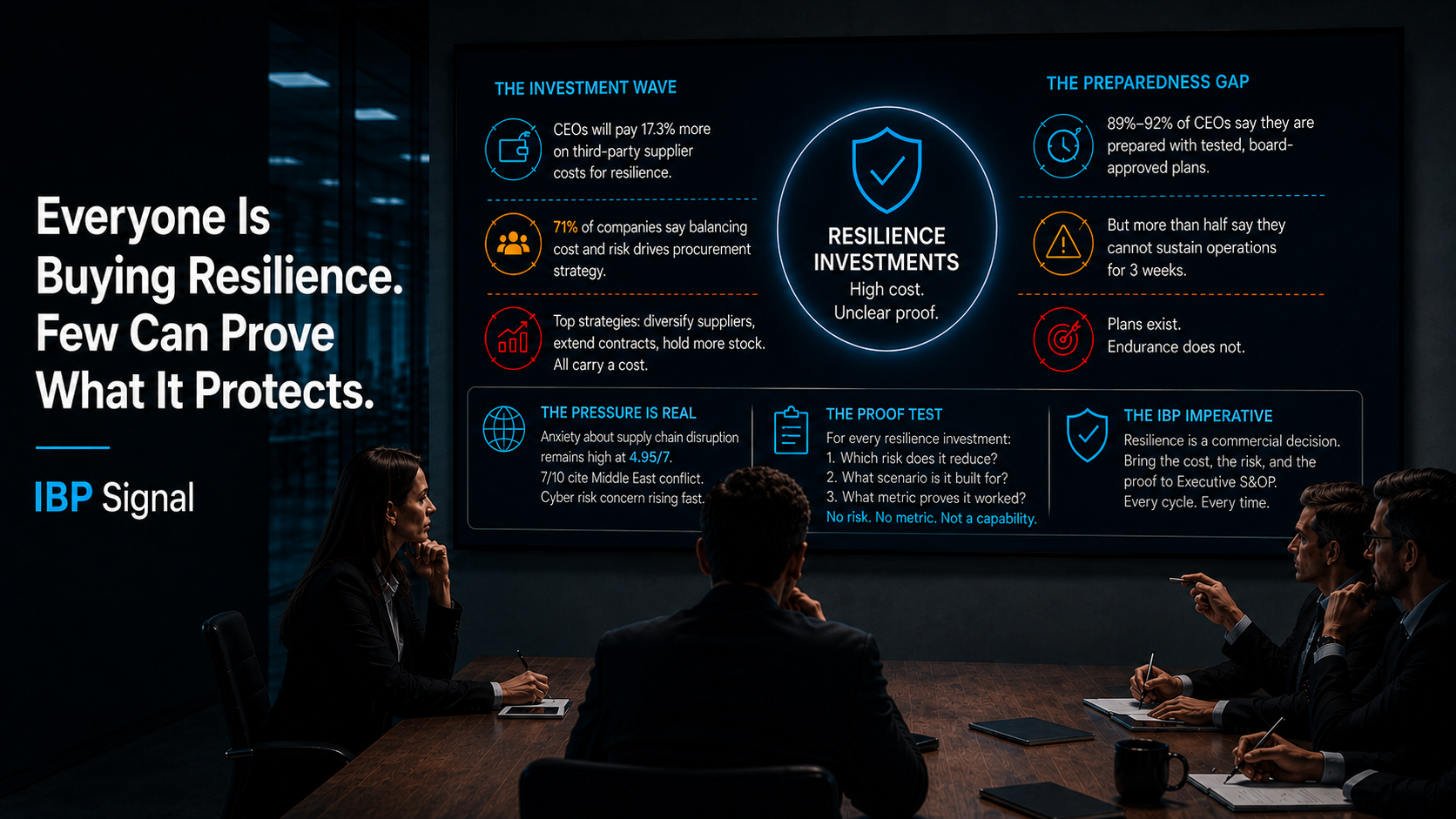
CEOs are paying more for resilience, but many organizations still cannot prove which risks those investments reduce or how long the business can keep operating under shock.
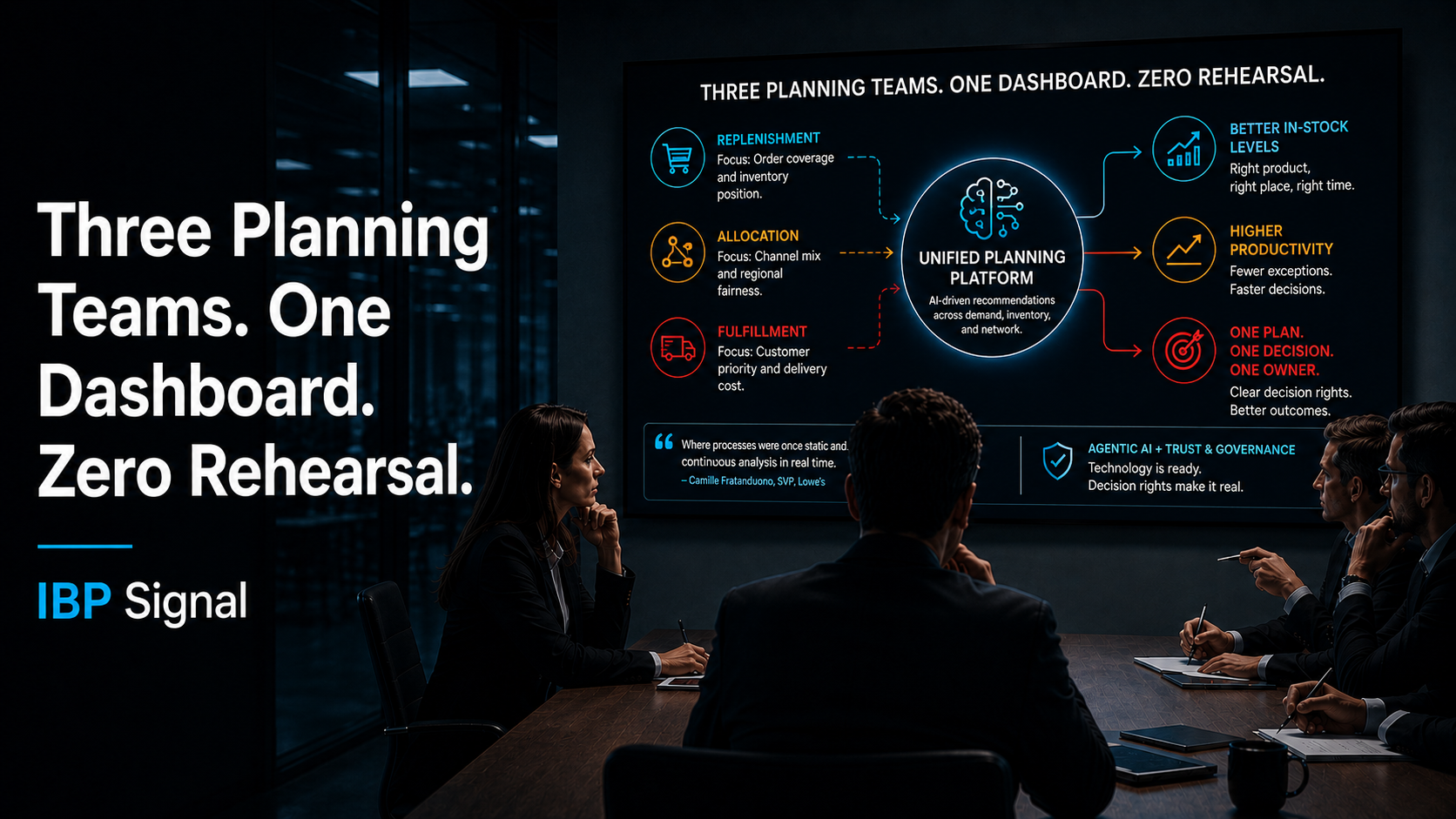
Lowe's unified planning move shows why decision rights, not dashboards, determine whether IBP teams can turn AI recommendations into faster supply chain decisions.
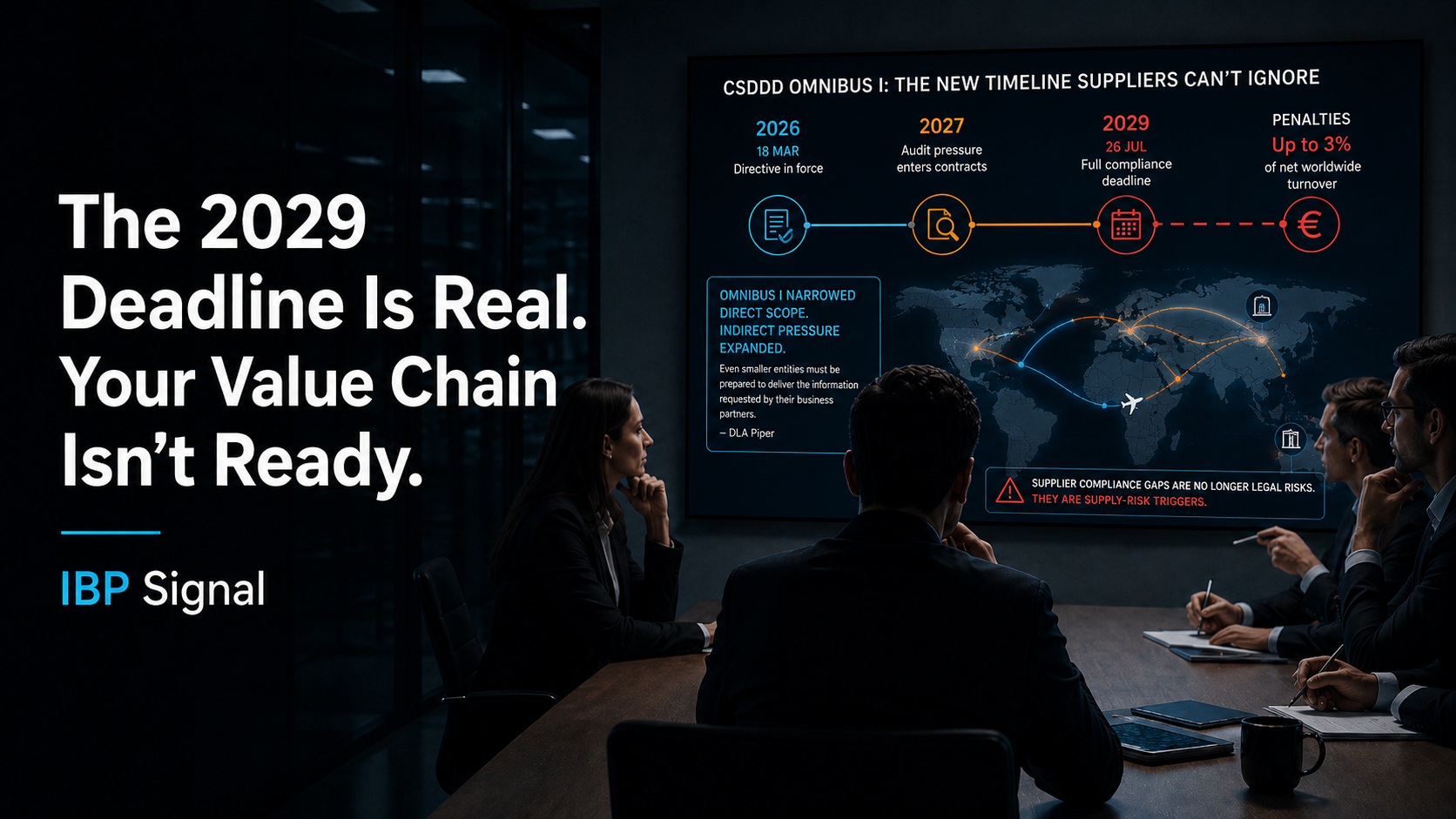
Omnibus I narrowed CSDDD direct scope, but indirect value-chain audit pressure will reshape procurement governance and S&OP planning before 2029.
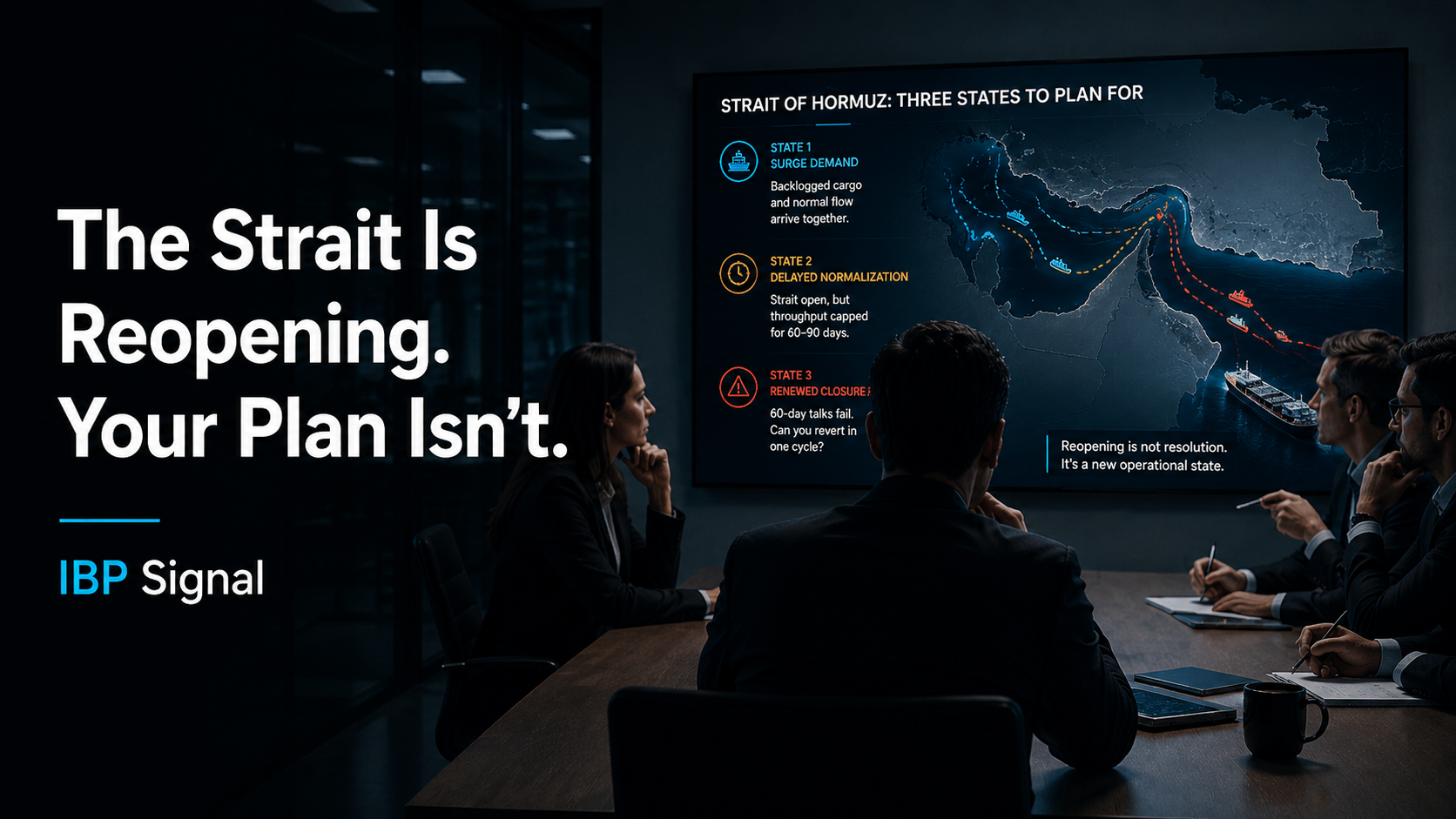
The Strait of Hormuz is reopening. Most IBP cycles treated the closure as temporary. Here's why that assumption is about to fail your next planning cycle.
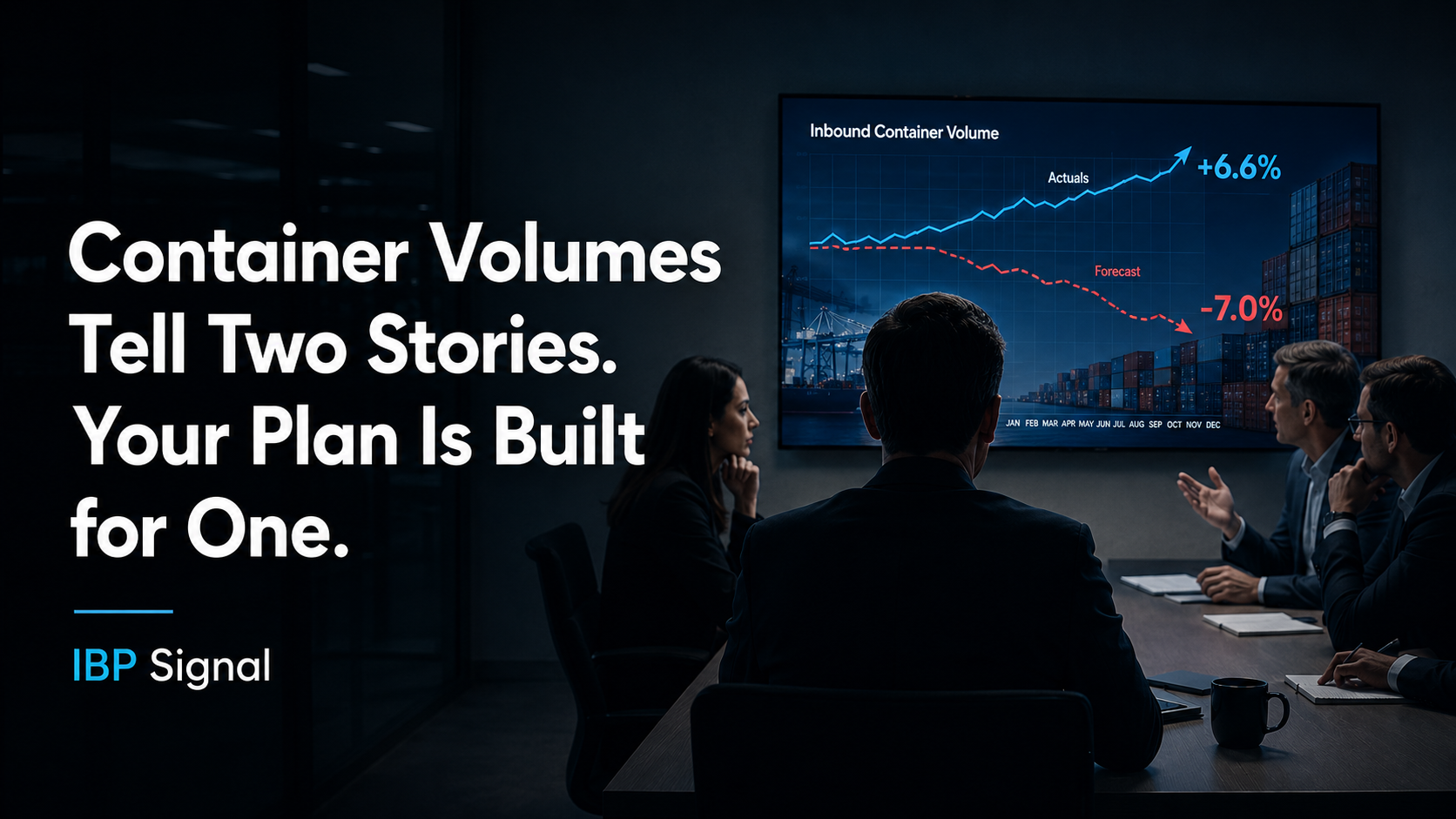
Two credible container-volume signals are moving in opposite directions. The planning risk is not which forecast is right. It is whether the plan can survive both.
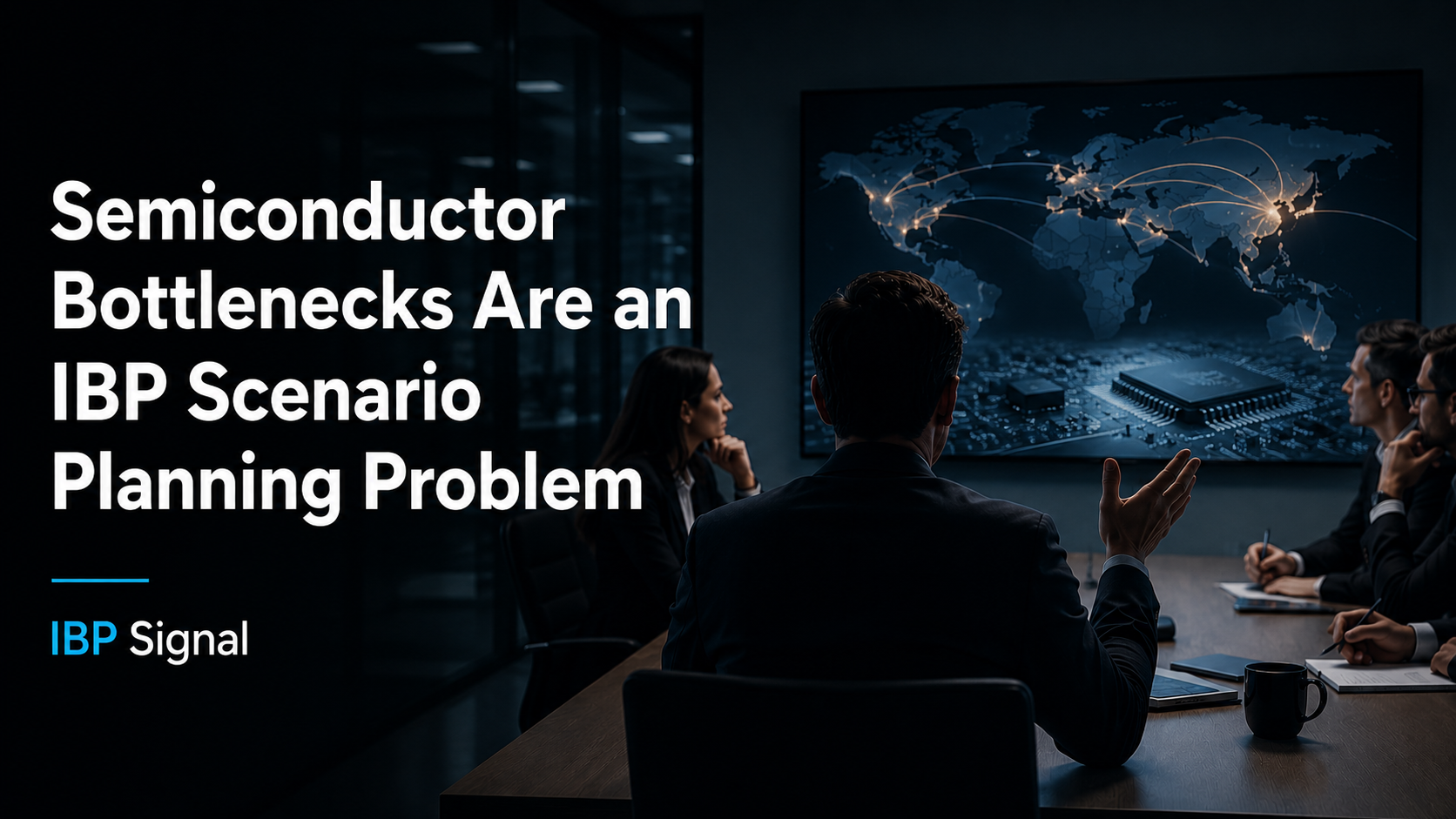
Semiconductor concentration is not just a capacity issue. For IBP leaders, it is a scenario-planning test: can the supply plan respond when assumptions move?
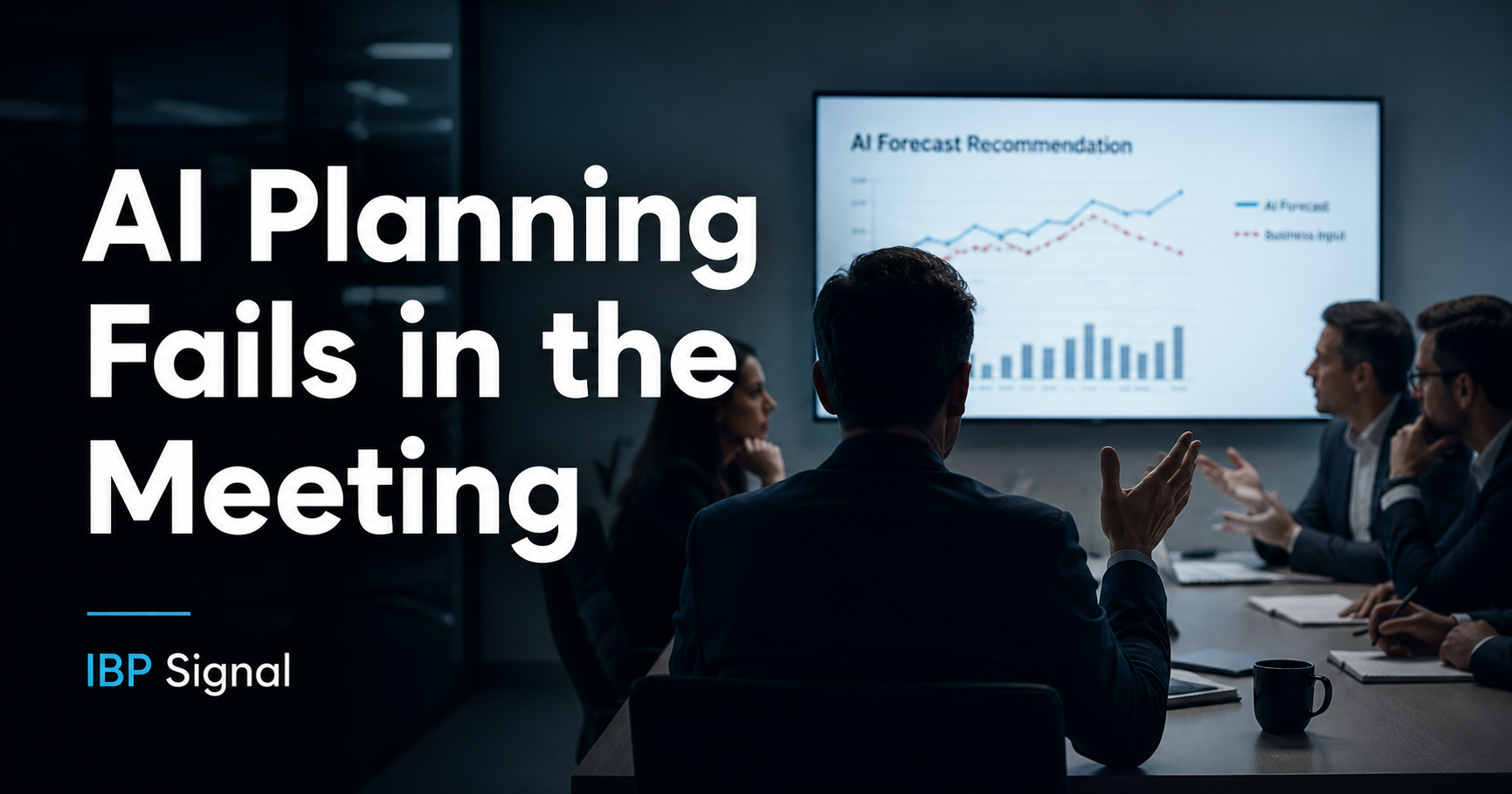
Most AI planning pilots do not fail because the model is weak. They fail because the planning cycle has not clarified ownership, constraints, and decision timing.
Subscribe, it's free
Join IBP Signal for practical supply chain planning signals, the 5-question planning risk checklist, and occasional subscriber-only planning prompts.